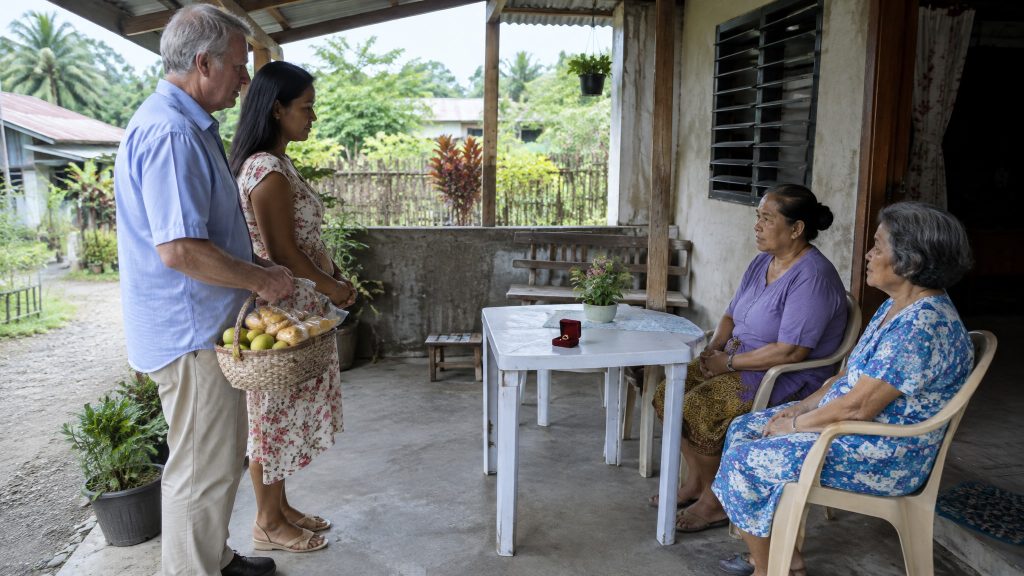
 AI-generated

Secure her family’s formal blessing before you present a ring or kneel in private. In Filipino culture, marriage unites two families, not just two individuals. That’s why the pamanhikan tradition is the real first step toward a lasting union, not a formality you can skip for a bigger surprise later.
Key Takeaways
- Secure formal parental blessing through pamanhikan before presenting a ring or making any private proposal to avoid offending her family.
- Wait until at least your second or third in-person visit to propose, allowing time to verify compatibility beyond digital communication.
- Bring modest gifts like fruit or pastries to pamanhikan rather than expensive items that could appear transactional or disrespectful.
- Choose a simple, durable engagement ring over an ostentatious diamond to demonstrate financial prudence valued in Filipino culture.
- Use ‘po’ and ‘opo’ when addressing elders during family meetings to signal cultural fluency and genuine respect.
Why Pamanhikan Is the Real Proposal in Filipino Culture
Pamanhikan is the moment your intentions get evaluated by the people who matter most to your partner. Skip it for a Western-style surprise and you risk offending her relatives, no matter how perfectly you planned the private moment. For many Filipino families, this public family ritual carries more weight than any romantic gesture performed without their knowledge.
Asking Her Father for Blessing Before You Kneel
Say you’ve been dating long-distance for two years and you’re planning to propose on your first or second visit to the Philippines. You feel sure about the relationship and want to create a memorable moment. But arriving with a ring hidden in your pocket before meeting her parents reads as disrespect, not romance.
Before you book travel, talk honestly with your partner about her family’s specific expectations. Families don’t all operate the same way, and assuming otherwise leads to avoidable missteps. Ask whether her parents expect a formal visit right when you arrive, or whether they’d prefer a brief informal introduction first. Preferences vary a lot between households.
When the formal home visit happens, bring something modest, like fresh fruit or boxed pastries, rather than expensive items that can look transactional. Showing up with simple gifts like these demonstrates respect without looking like you’re trying to buy approval. Dress conservatively too, a collared shirt and slacks is the safe choice, because dressing too casually suggests you don’t grasp the occasion. Use “po” and “opo” when addressing her elders. It signals cultural fluency and shows you’ve made a genuine effort to learn Filipino etiquette, not just a few surface phrases.
Then ask her parents directly for permission to marry their daughter, before you present a ring or make any public declaration. This isn’t rhetorical. It invites them to judge your character and sincerity based on what they’ve seen and what their daughter has told them. What Filipino parents expect from a foreign boyfriend can help you prepare for questions about your career, your living situation and your long-term plans. Those questions can feel intrusive, but they’re real vetting. Parents want to know whether you can support their daughter, especially given the challenges that come with cross-cultural marriage and possible relocation.
Only after you have that blessing should the private kneeling proposal happen. Treat it as a personal celebration, not the main event. Proposing privately after securing the parents’ blessing lets couples celebrate just the two of them while still honoring the family-first structure of Filipino marriage traditions. Urban families may be more flexible about all this; provincial families often hold to tradition more strictly. Your partner is still the best guide to her own family’s expectations, and traditional versus modern dating practices is worth reading if you want the fuller picture before you assume anything.
This process doesn’t guarantee quick acceptance. Some parents need several visits, or months, before they feel comfortable with a foreign son-in-law. Families that hold strongly to Filipino family values when dating will put collective harmony ahead of individual timing, so patience isn’t optional, even when you’re certain of your feelings.
Timing Your Engagement After Long-Distance Dating
Don’t propose on your first visit to the Philippines, even if the connection feels undeniable after months of video calls. A credible proposal needs enough in-person time to confirm what months of screen time can hide: the daily, practical compatibility that only shows up face to face. Rushing the engagement can read as naive, or as disrespect for how seriously marriage is treated in Filipino culture.
Wait until at least your second or third visit. That gives you time to meet her family informally and show commitment that holds up over months, not just one good trip. Filipinos2Meet advises members to complete several in-person visits and family introductions before they even consider engagement, so the relationship rests on verified compatibility rather than hope. These interim visits do real work: you see how she handles her relatives, how she handles stress, and whether your communication holds up when either of you is tired or frustrated. You also build credibility with her parents, who are watching whether your interest survives past the novelty, or whether you vanish once the logistics get complicated.
Plenty of foreign partners are working against visa timelines or age-related pressure that makes waiting feel impractical. But framing patience as seriousness, rather than hesitation, actually builds trust faster with both your partner and her family. Showing you respect her family’s timeline over your own convenience proves something grand gestures can’t. This kind of deliberate pacing is also what building trust in a long-distance relationship depends on.
Logistics matter here too. Planning a safe visit to meet her family means coordinating schedules, checking local holidays, and arranging transportation in a way that respects her family’s comfort. Arrive during a major festival or a family crisis and you’ve shown poor judgment before you’ve said a word. Plan around ordinary weekdays instead, and you get real interaction without performance pressure. Parents notice this kind of foresight.
Rushing because you’re afraid of losing her, or worried about biological clocks, adds risk to a decision that deserves care. The engagement period itself does real work beyond wedding planning: it tests how you two handle disagreements, money, and family obligations together. Couples who skip that testing phase often find the mismatches only after the wedding, when separation is far harder, emotionally and legally.
Your partner may push to move faster, especially if she’s facing social or economic pressure. Your job is to protect both of you from a decision made under that pressure, with incomplete information. Framing the wait as investment, not rejection, and saying so honestly, builds the relationship’s foundation more than a premature proposal ever could.
Choosing Rings and Settings That Respect Tradition
Once pamanhikan is done and the timing is right, pick a simple, durable ring over an ostentatious one. Many Filipino families read modesty and financial prudence as signs of character. Overspending on jewelry can look like irresponsibility, not devotion. A modest ring says you’re prioritizing a stable future together, which fits how marriage is often viewed here: as a practical partnership, not a display.
The setting should honor family involvement, not just cinematic romance. A quiet dinner at her parents’ home, or somewhere meaningful from one of your earlier visits, shows you’ve paid attention to her life. A public spectacle can cause discomfort rather than joy, especially if her family wasn’t part of the moment or strangers end up watching. A private celebration lets you both feel the moment without an audience.
The ring and the setting matter less than showing you understand and respect her background. What makes a proposal land well in a Filipino context isn’t its cost or its originality. It’s whether it fits the values her family holds. Talk about preferences openly beforehand, so the moment reflects both of your visions rather than an idea borrowed from a movie.
Some couples bring in details from both sides, maybe a family heirloom alongside a new ring, or a proposal held somewhere tied to her childhood. These choices work when they mean something you can explain, not when they’re just decoration.
Skip comparing your plan to proposals you’ve seen online or heard about from friends. Every family’s expectations are different, and what worked for one couple might land badly with another. Trust your partner’s read on her own family over generic advice, even when it runs against what you pictured.
The proposal is a beginning, not an ending. It opens a stretch of mutual adaptation that continues well past the wedding, and starting it with humility toward her family’s customs sets the tone for everything after.
FAQ
How many visits should happen before I propose?
Plan on at least a second or third visit, not the first. That gives you and her family time to see the relationship hold up in person, not just over video calls.
What should I bring to the pamanhikan visit?
Keep it modest: fresh fruit or boxed pastries work well. Expensive gifts can come across as an attempt to buy approval rather than show respect.
Do all Filipino families expect the same level of formality?
No. Urban families tend to be more flexible; provincial families often hold closer to tradition. Ask your partner directly rather than guessing.
What if her parents don’t approve right away?
That’s not unusual. Some families need multiple visits before they warm to a foreign son-in-law. Patience here matters more than persuading them quickly.
If you’re planning a visit to meet her family for the first time, start with planning a safe visit to meet her family before you book anything.
Frequently Asked Questions
What if her parents refuse permission during pamanhikan?
Accept their decision gracefully and ask respectfully what concerns they have, then address those issues through actions over time rather than arguments. Some families need multiple visits or extended observation before feeling comfortable, so patience demonstrates seriousness more effectively than persuasion. Your partner can help clarify whether refusal is absolute or conditional on specific changes.
Can I propose privately before pamanhikan if we already discussed marriage?
Even if you have verbally agreed to marry, presenting a ring before the formal family blessing still violates cultural protocol and may embarrass her parents. Keep the private agreement between you two until after pamanhikan occurs, then celebrate with a personal proposal that honors both your intimacy and her family’s role. This sequence protects everyone’s dignity and prevents awkwardness during the official visit.
How do I know if her family expects traditional or modern proposal customs?
Ask your partner directly about her parents’ specific expectations rather than guessing based on geography or generation, as preferences vary even within regions. She can tell you whether they want a formal pamanhikan, prefer a casual meeting first, or have adapted traditions to fit contemporary circumstances. Following her guidance shows respect for her expertise about her own family dynamics.
Should I bring a translator to pamanhikan if I don’t speak Filipino?
Having your partner translate during the visit is usually preferable to bringing an outside translator, as it maintains intimacy and allows her to convey nuance appropriately. Learn basic phrases like ‘po’ and ‘opo’ beforehand to show effort, but rely on her for complex conversations about intentions and future plans. This arrangement reinforces your partnership while ensuring clear communication with her parents.